Energy
Brent Holds Near $92 as a Houthi Refinery Claim and Gulf Shipping Attacks Offset the Equity Selloff Ahead of OPEC+ Talks
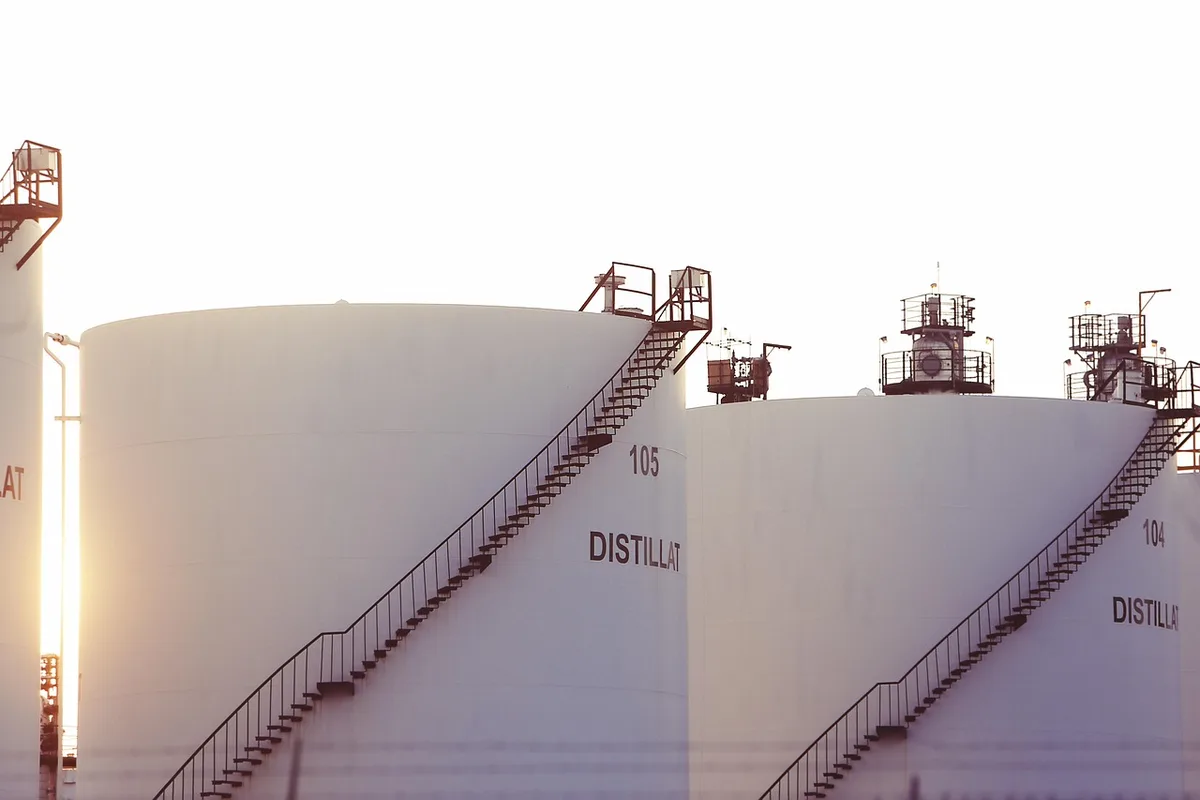
Image: Life-Of-Pix via Pixabay
Oil is little changed early Monday after a weekly decline, with supply recovery pulling prices down and Middle East attacks limiting the drop.
By Noris Ortiz ·
Oil prices were close to flat early Monday as a global equity selloff pulled crude lower while fresh attacks in the Middle East kept a risk premium in place. Brent crude fell 28 cents, or 0.3%, to $92.29 a barrel by 0216 GMT, and US West Texas Intermediate fell 15 cents, or 0.18%, to $83.26, Reuters reported [1]. Later in the Asian session, Brent was up 10 cents, or 0.11%, at $92.67 as of 7:23 a.m. Saudi time, after earlier dipping about $1 to $91.57, and WTI was up 16 cents at $83.57, according to a second Reuters report [2]. The Associated Press had Brent down 0.4% at $92.21 and US benchmark crude down 0.3% at $83.14 in early Monday trading [3]. Brent fell about 4% last week and WTI about 5%, Reuters said [1][2].
The new development since the weekend is a claim by the Iran-aligned Houthi movement that it attacked a Saudi Arabian oil refinery on Sunday, Reuters reported [1][2]. The reports gave no further detail on the target or any damage, and did not include a response from Saudi Arabia or its coalition partners, so the claim remains unverified in the sources reviewed for this article. Reuters also said multiple attacks on shipping in the Gulf and near the Strait of Hormuz were reported over the weekend [1]. In a related development, Bahrain said an Iranian attack on Saturday hit a civilian industrial facility, while Iran's Revolutionary Guards said they launched a missile-and-drone assault on US military positions in Bahrain, according to Reuters [2].
Against that, the broader direction has been lower. The AP attributed the weekly slide to a continuing recovery in supply, even though the United States and Iran have not reached a permanent deal over the war, and it said analysts expect oil and fuel prices to fall further [3]. Brent remains well above the roughly $72 it traded at in late February, before the US war with Iran began, the AP noted [3]. Mukesh Sahdev, chief oil analyst at XAnalysts in Sydney, told Reuters that oil's recent decline was a case of momentum, and warned that the count of empty vessels is building in crude shipping while laden vessels are not, a sign that attacks are affecting flows [1].
Vandana Hari of Vanda Insights said "a tense US-Iran stalemate increasingly looks like the base case through year-end," according to Reuters, and she suggested that prices would stay broadly rangebound unless either side takes more concrete steps toward escalation [2]. That view helps explain why crude has not moved sharply in either direction despite the weekend headlines and the equity rout: traders are weighing improving supply against a persistent chance of disruption.
OPEC+ is the next scheduled catalyst. Reuters said ministers will hold a series of meetings on Nov. 29 to decide the group's 2027 output policy [1][2]. StockVolt reported on Sunday on what is at stake in that meeting, including the capacity review meant to set 2027 production baselines; the latest reports add no new information on how the review has gone.
Why it matters for markets: crude prices feed directly into fuel costs and inflation readings, which central banks are watching closely while they debate further interest-rate increases. Oil also trades alongside equities in risk-off moves, so a rebound in stocks could ease that pull, while a major attack on Gulf energy infrastructure could lift prices regardless of what shares do. This is a description of the forces at play, not a forecast.
What to watch next: any confirmation or denial of the Houthi claim and reaction from Riyadh, further reports of attacks on shipping near Hormuz, whether the US and Iran make progress on a lasting agreement, how stocks trade after the US open, and the outcome of the OPEC+ meetings on Nov. 29.
Sources:
[1] Reuters (via Yahoo Finance), "Oil prices fall amid equity selloff though Iran war attacks limit losses", November 23, 2026. https://finance.yahoo.com/energy/articles/oil-prices-fall-amid-equity-022442236.html
[2] Reuters (via Arab News), "Oil holds in tight range as Gulf attacks sustain risk premium", November 23, 2026. https://www.arabnews.com/energy/oil-holds-in-tight-range-as-gulf-attacks-sustain-risk-premium-3013656
[3] Associated Press (via KPRC Click2Houston), "US futures climb and Asian shares mostly decline as some tech stocks fall", November 23, 2026. https://www.click2houston.com/business/2026/11/23/us-futures-climb-and-asian-shares-mostly-decline-as-some-tech-stocks-fall/
This article was produced with AI assistance. It is for informational purposes only and is not financial advice. StockVolt and its authors may hold positions in securities mentioned.