Energy
OPEC+ Ministers Meet Nov. 29 to Set a 2027 Production Framework After the UAE's Exit and Iran War Disruption
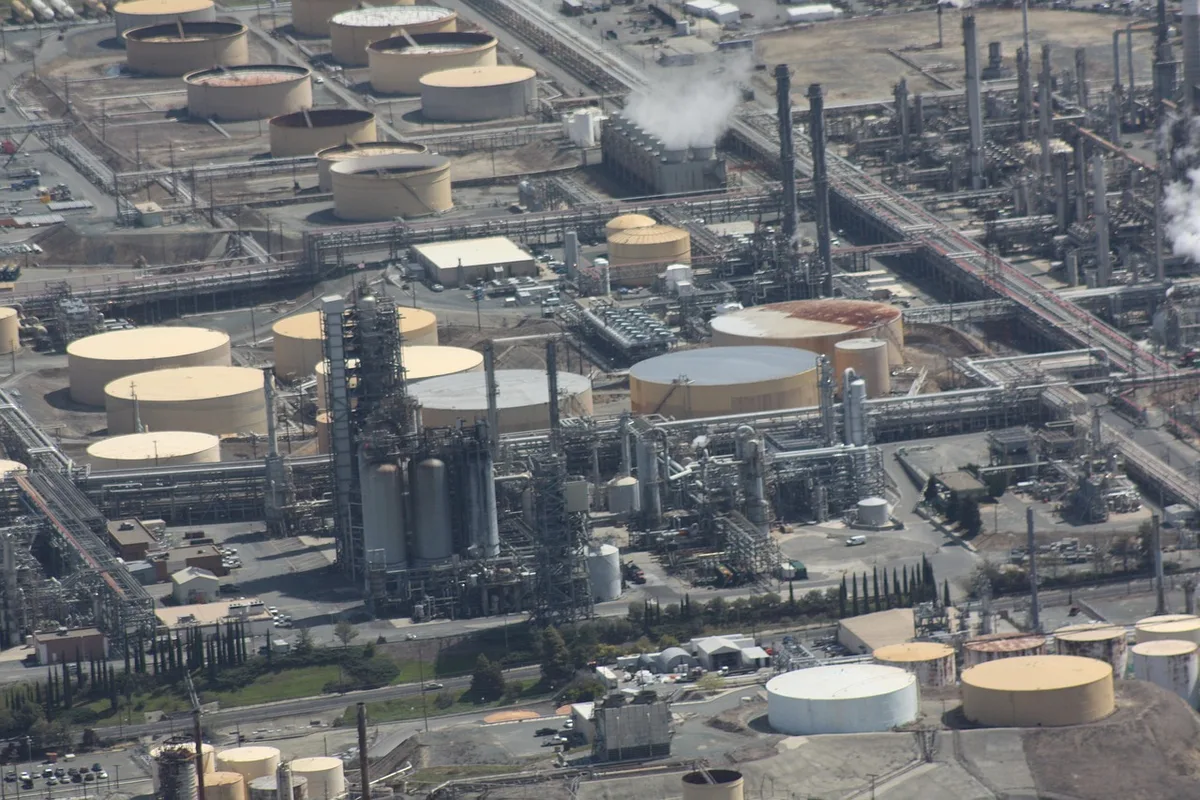
Image: jpenrose via Pixabay
The full group is expected to decide 2027 quotas, but a capacity review meant to anchor them was delayed by the war and its status is unclear.
By Emma Cruz ·
OPEC+ ministers are due to meet on Nov. 29 in a session that analysts expect to settle the group's production framework for 2027, a decision that arrives while the Middle East conflict is still distorting oil flows and after the alliance lost one of its larger producers [1][2]. OPEC said in its announcement after the previous meeting that the next gathering would be held on 29 November 2026 [2].
The groundwork was laid on Nov. 1, when seven core members met online. According to OPEC, Saudi Arabia, Russia, Iraq, Kuwait, Kazakhstan, Algeria and Oman decided to maintain September 2026 required production for December 2026, reiterated full conformity with the Declaration of Cooperation, and said they would keep meeting monthly [2]. Reuters reported that the same seven had finished the phased rollback of a 1.65 million barrel-per-day cut in September 2026 and had left targets unchanged for October and November [1].
Reuters added an important caveat about what those targets mean in practice. Gulf members have been lifting exports that were disrupted by the US-Iran war, but most are still producing well below their targets [1]. That limits how much the headline quotas reveal about actual supply, and it makes the 2027 baselines more consequential, because they will set the reference point against which future output is judged.
The 2027 framework rests on a capacity review. A year earlier, according to Reuters, OPEC+ approved a mechanism to assess each member's maximum production capacity, to be used for output baselines from 2027, with the assessment planned between January and September 2026 [3]. Reuters said then that one company would assess 19 of the 22 members in the group at that time, while sanctioned countries Russia, Iran and Venezuela would be assessed separately or on the basis of their average output from August to October 2026 [3]. In its November 2026 report, Reuters said about 2 million barrels per day of cuts cover most members through the end of the year, that the review must be completed in the fourth quarter before baselines are set, and that the Iran war had disrupted capacity projects, pushing the expected completion to mid-November [1]. That report did not say whether the review has since been finished, and none of the sources reviewed for this article reported its results.
Membership has also changed. Reuters reported that the United Arab Emirates quit OPEC in May 2026 and that all members of the 21-country group are due to meet on Nov. 29 [1]. The earlier Reuters report from 2025 had described the UAE as seeking higher quotas, a dispute that now sits outside the group's own negotiating table [3]. Jorge Leon, an analyst at Rystad, told Reuters that "the much more important test comes at the November 29 ministerial meeting" [1].
Why it matters for markets: crude supply expectations are a central input for energy company earnings, fuel costs and the inflation readings central banks are tracking. A framework that gives members more room to produce would point to a larger supply cushion, while tighter baselines would do the opposite. Because capacity numbers for Russia and Iran rely on different methods than those for other members, any disagreement over how they are treated could complicate the talks. These are observations about how the process works and not forecasts of the outcome.
What to watch next: whether OPEC+ publishes results of the capacity review, whether the group announces 2027 baselines or defers them, how the exit of the UAE shapes the discussion, and whether the seven core members keep their monthly cadence of meetings. The outcome of the meeting was not known as of Sunday, Nov. 22, and the date and format are those announced by OPEC.
Sources:
[1] Reuters (via Star-Advertiser), "OPEC+ keeps December oil output targets steady amid Iran war", November 1, 2026. https://www.staradvertiser.com/2026/11/01/breaking-news/opec-keeps-december-oil-output-targets-steady-as-iran-war-disrupt-flows/
[2] OPEC, "Saudi Arabia, Russia, Iraq, Kuwait, Kazakhstan, Algeria, and Oman reaffirm commitment to market stability", November 1, 2026. https://www.opec.org/pr-detail/2033620-1-november-2026.html
[3] Reuters (via Yahoo Finance), "OPEC+ holds oil output steady, agrees capacity mechanism", November 30, 2025. https://finance.yahoo.com/news/opec-set-hold-oil-output-102114025.html
This article was produced with AI assistance. It is for informational purposes only and is not financial advice. StockVolt and its authors may hold positions in securities mentioned.