Tech
US Tightens AI Chip Export Rules, Requiring Licenses for Five Countries and Curbing Remote Access for Chinese Firms
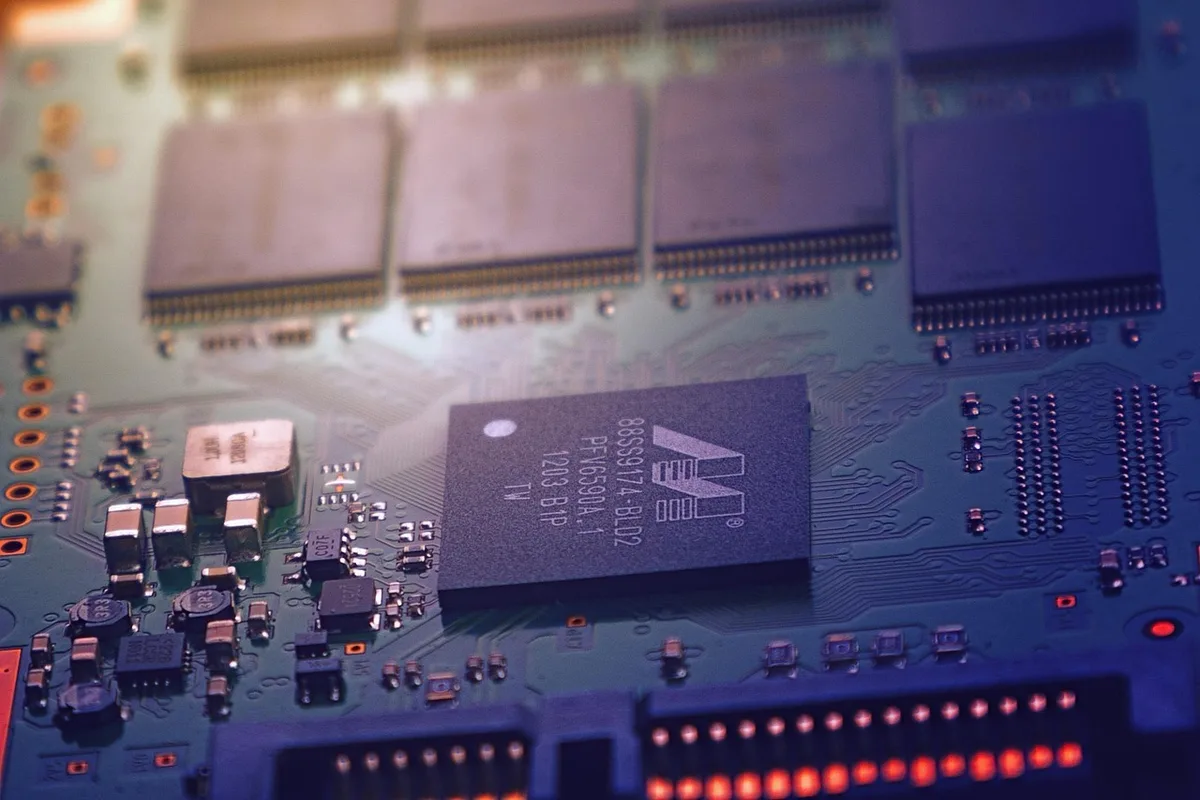
Image: jplenio via Pixabay
A Commerce Department interim rule targets overseas data centers as a route around export controls, giving existing operators 90 days to seek licenses.
By Emmanuel Cruz ·
The U.S. Commerce Department on Monday issued an interim final rule meant to stop Chinese companies from reaching advanced artificial intelligence chips through data centers abroad, adding license requirements for shipments to five countries and for providing computing power to companies in China and other restricted nations, according to Fortune and TechCrunch [1][2]. Fortune said the rule takes effect once it is published in the Federal Register [1].
The rule has two main parts. First, exporting advanced AI chips to data centers in Indonesia, Malaysia, Singapore, Thailand and Brazil will require a license [1]. TechCrunch reported that Commerce said these countries "present a higher-than-normal risk of diversion" [2]. Second, a license will also be needed if large data center operators anywhere in the world want to give access to companies headquartered in China, according to Fortune [1]. TechCrunch said the remote-access provisions cover China and other embargoed countries, including Russia, Iran and North Korea, and extend to indirect access through intermediaries or brokers [2].
The scope is defined by computing power. TechCrunch reported that the rule applies to data centers or networks able to supply more than 12 million total processing performance, a measure used in export controls, which it estimated at roughly the maximum output of about 750 Nvidia H100 or H200 chips [2]. End users that are, or are owned by, U.S.-headquartered companies are exempt from the new export license requirement. Fortune said Microsoft, Oracle and Amazon are expected to qualify, although the remote-access limits would still apply to them [1]. Data centers already serving covered customers have 90 days to obtain a license [1][2]. TechCrunch added that the rule rescinds the Biden administration's January 2025 AI Diffusion Rule, which the Trump administration said in May it would discard [2].
The move follows a scandal involving Nvidia. Fortune reported that Megaspeed, a Singapore-based company, is accused of funneling Nvidia chips to China, with Malaysia reportedly hosting its data centers, and that Megaspeed denies sending chips to China [1]. Nvidia co-founder Jensen Huang resigned as CEO on Thursday amid the controversy [1]. TechCrunch said the U.S. government reportedly wants to place Megaspeed on the entity list, which restricts exports to listed firms [2]. Fortune reported the Commerce press release said the rules were written at the direction of the Treasury Department and the National Security Council [1].
Reactions so far come mainly from analysts. Jennifer Lind of Dartmouth told Fortune the administration wants Malaysia and Singapore to stay within the U.S. AI ecosystem without becoming conduits for Chinese firms, while Joshua Kurlantzick of the Council on Foreign Relations said the controls "could be disastrous" in Malaysia [1]. Fortune reported no official response from Beijing, noting that China has largely withheld permission for its companies to import Nvidia chips and is steering them toward domestic alternatives such as Huawei's [1]. Nvidia's reaction to the rule was not reported in either article [1][2]. TechCrunch, citing Reuters, said Chinese AI firms are rushing to secure overseas computing capacity amid fears of tighter U.S. restrictions [2].
Congress is also weighing the issue. Fortune listed four bills that would codify or expand such controls, including the Remote Access Security Act, which passed the House in January and is pending in the Senate [1].
Why it matters for markets: chip and data-center stocks have been among the most sensitive to export policy and to the AI spending cycle. Reuters reported that the Philadelphia semiconductor index fell 4% in early Monday trading, and said in the same report that the U.S. had unveiled interim rules tightening China's access to advanced AI chips, although the articles reviewed do not establish that the rule caused the decline [3].
What to watch next: publication of the rule in the Federal Register and any changes to its details, how Singapore, Malaysia and the other named countries respond, whether Megaspeed is added to the entity list, any reaction from Beijing, and what Nvidia and cloud providers say about licensing when Nvidia reports results on Tuesday.
Sources:
[1] Fortune, "The Nvidia scandal fuels tougher China chip rules as Commerce targets Singapore and Malaysia", November 16, 2026. https://fortune.com/2026/11/16/new-commerce-rule-nvidia-chip-singapore-malaysia-china/
[2] TechCrunch, "US tightens AI chip export controls to deter Chinese companies from accessing compute remotely", November 16, 2026. https://techcrunch.com/2026/11/16/us-tightens-ai-chip-export-controls-to-deter-chinese-companies-from-accessing-compute-remotely/
[3] Reuters (via MarketScreener), "Wall St falls as Nvidia jitters cloud sentiment ahead of results", November 16, 2026. https://www.marketscreener.com/news/s-p-500-nasdaq-futures-slide-as-nvidia-earnings-anthropic-debut-loom-ce785eded080f124
This article was produced with AI assistance. It is for informational purposes only and is not financial advice. StockVolt and its authors may hold positions in securities mentioned.